Analysis
The Generational Playbook for Modern Brands
How generational experiences shape the way people discover, understand and relate to brands. The article examines the cultural and technological forces behind generational behaviour and what they mean for contemporary brand building.
Building a brand requires more than great ideas or strong execution. It requires a clear understanding of the people you are selling to.
When brands think about their audience, they usually try to define a specific group based on gender, demographics, economic class, and more. Keeping that context in mind, we want to discuss an interesting observation that sits at the heart of this exercise of getting to know your customer or target audience, if you will.
The market today is seeing an unusual overlap on one of the most fundamental factors: age.
Five different generations are participating in the economy at the same time.
Baby Boomers, Gen X, Millennials, Gen Z, and Gen Alpha are all discovering brands, influencing choices, and shaping demand through very different lenses.
Each generation has grown up with its own relationship to media, authority, money, and technology. These experiences shape how people perceive brands, who they trust, what they expect from you, and what eventually gets them to convert.
This week, we are looking at this generational landscape as one layer of consumer understanding. We have put together a shorthand to help you familiarise yourself with these generational nuances.
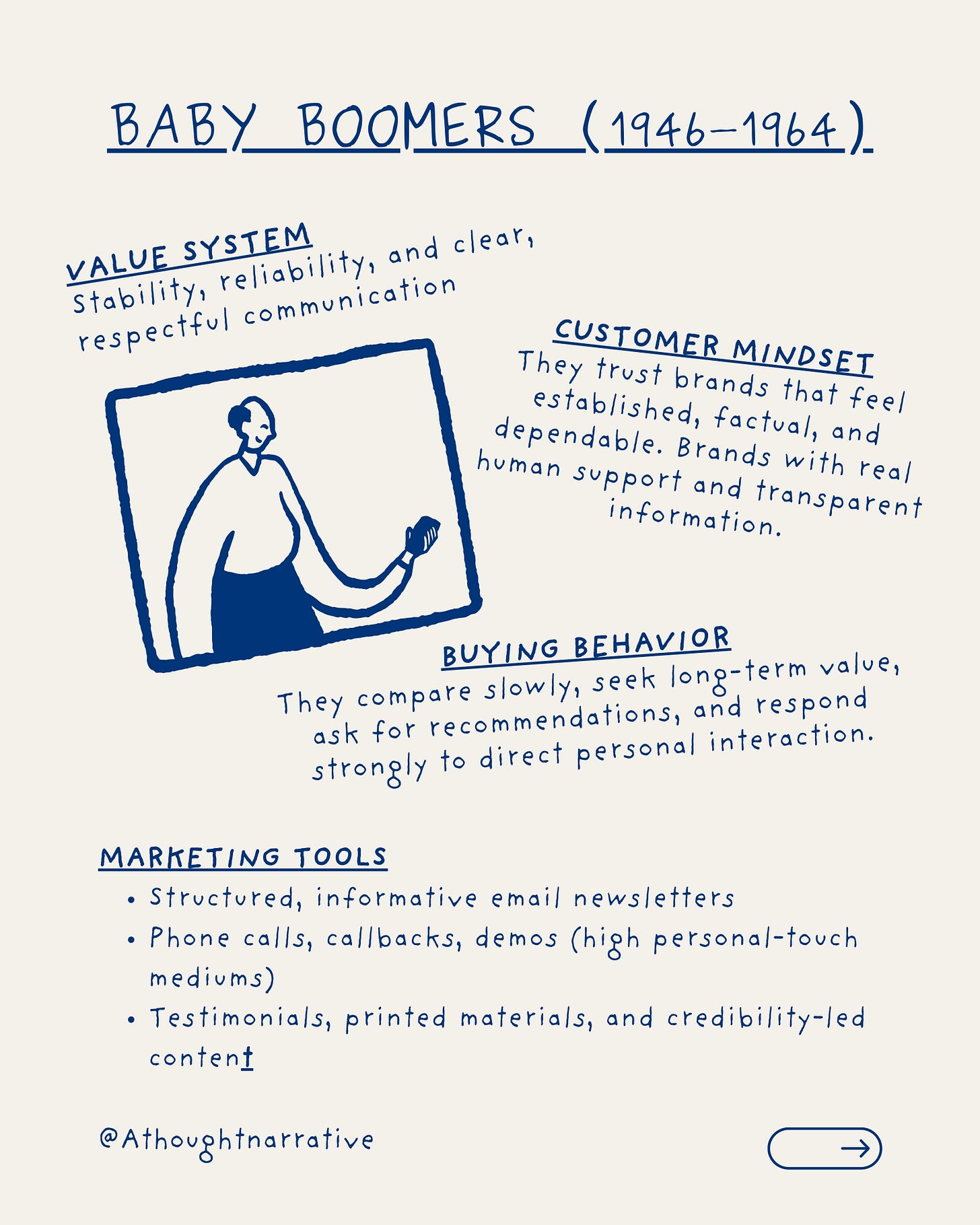
Baby Boomers (1946–1964)
For Baby Boomers, confidence comes from clarity and familiarity. Brands feel strongest when they communicate steadily and behave predictably over time. Trust is built through consistency rather than constant reinvention. When engagement feels rushed or overly casual, it tends to create distance rather than connection.
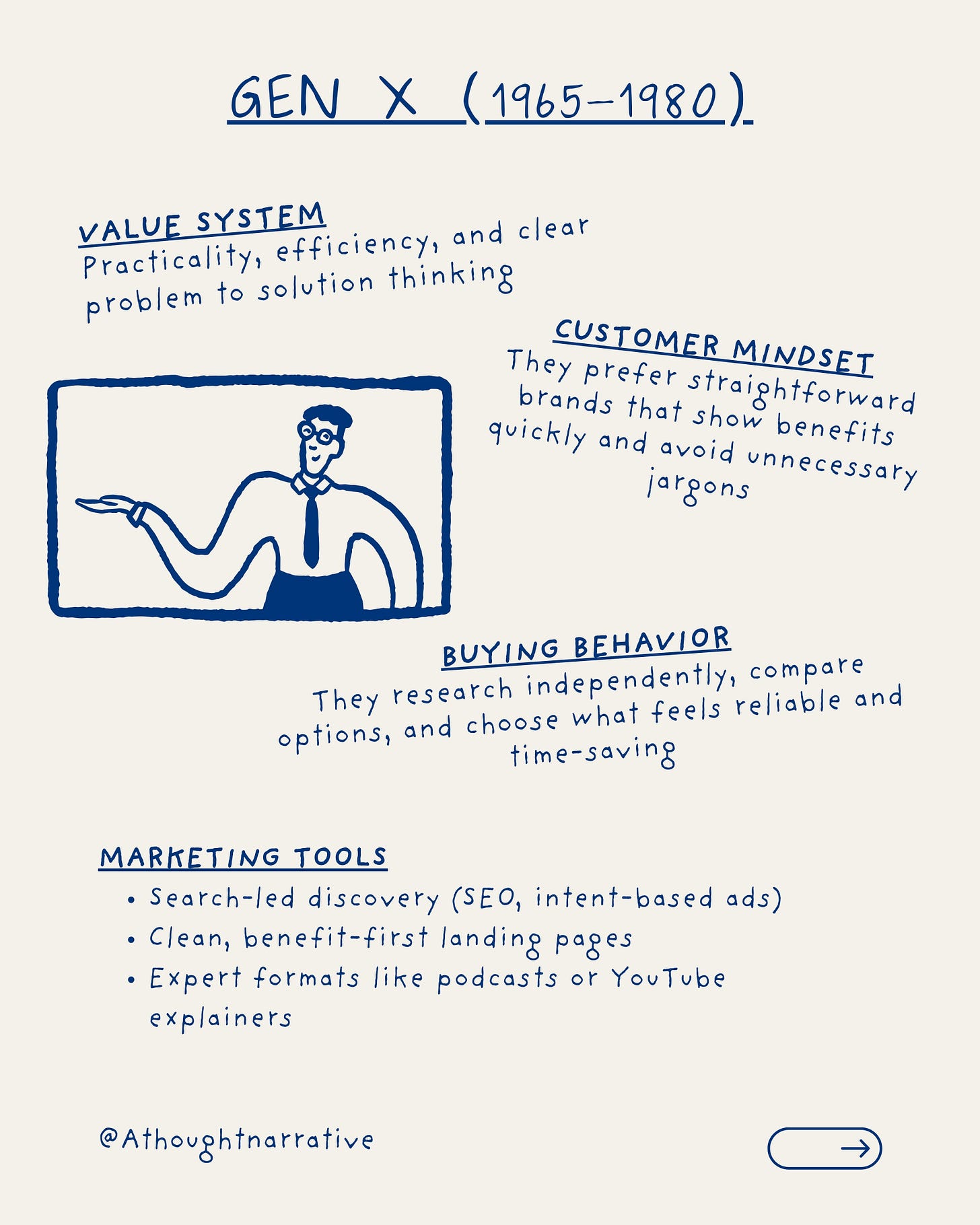
Gen X (1965–1980)
Gen X values usefulness and efficiency. They engage when a brand respects their time and communicates directly. Decisions are shaped by clarity, ease, and reliability rather than aspiration alone. Brands that reduce friction tend to earn long-term loyalty here.
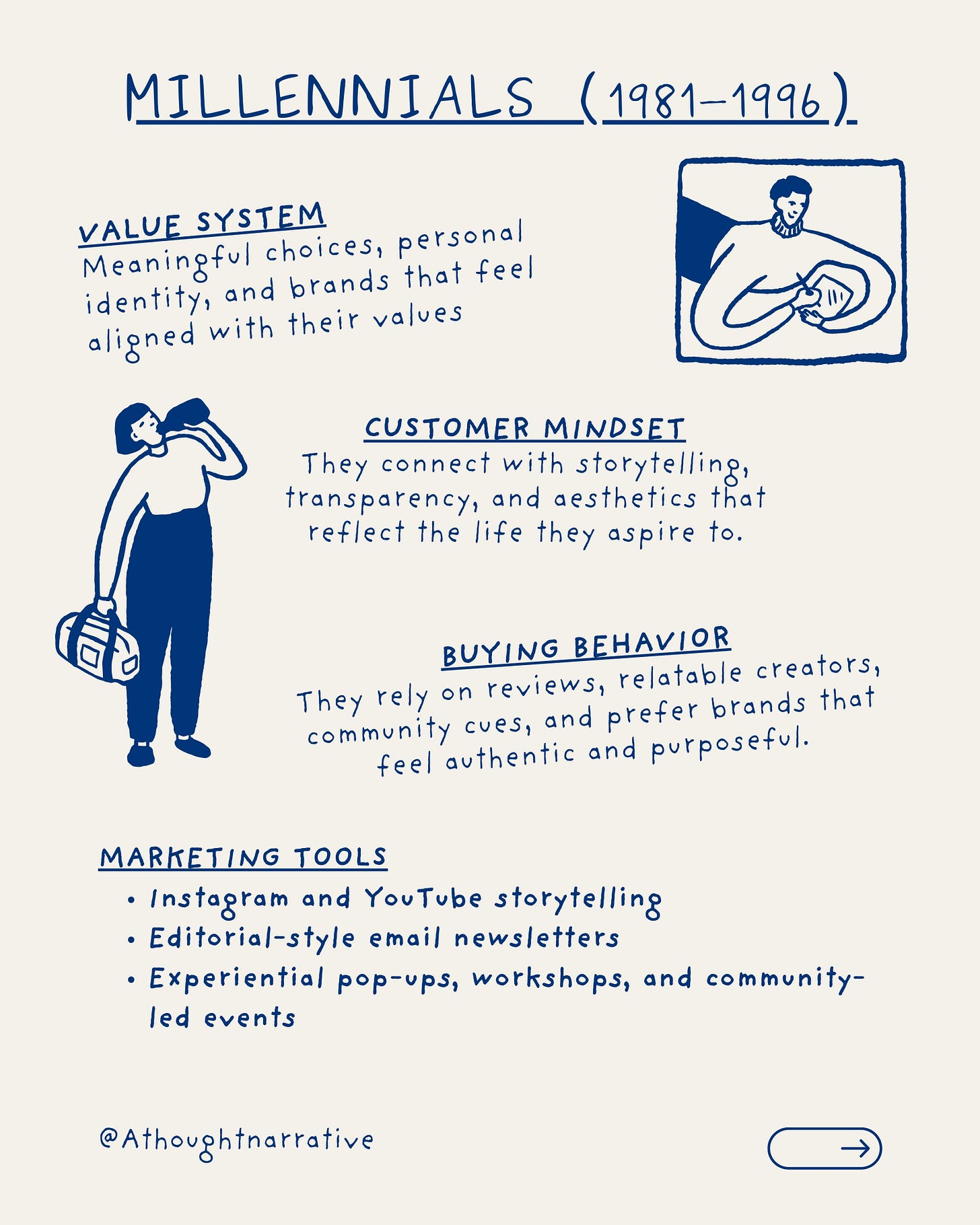
Millennials (1981–1996)
Millennials read brands as systems. Product, tone, design, and behaviour are evaluated together. Alignment across these elements builds credibility. When a brand feels thoughtful and coherent, it earns attention and advocacy more naturally.
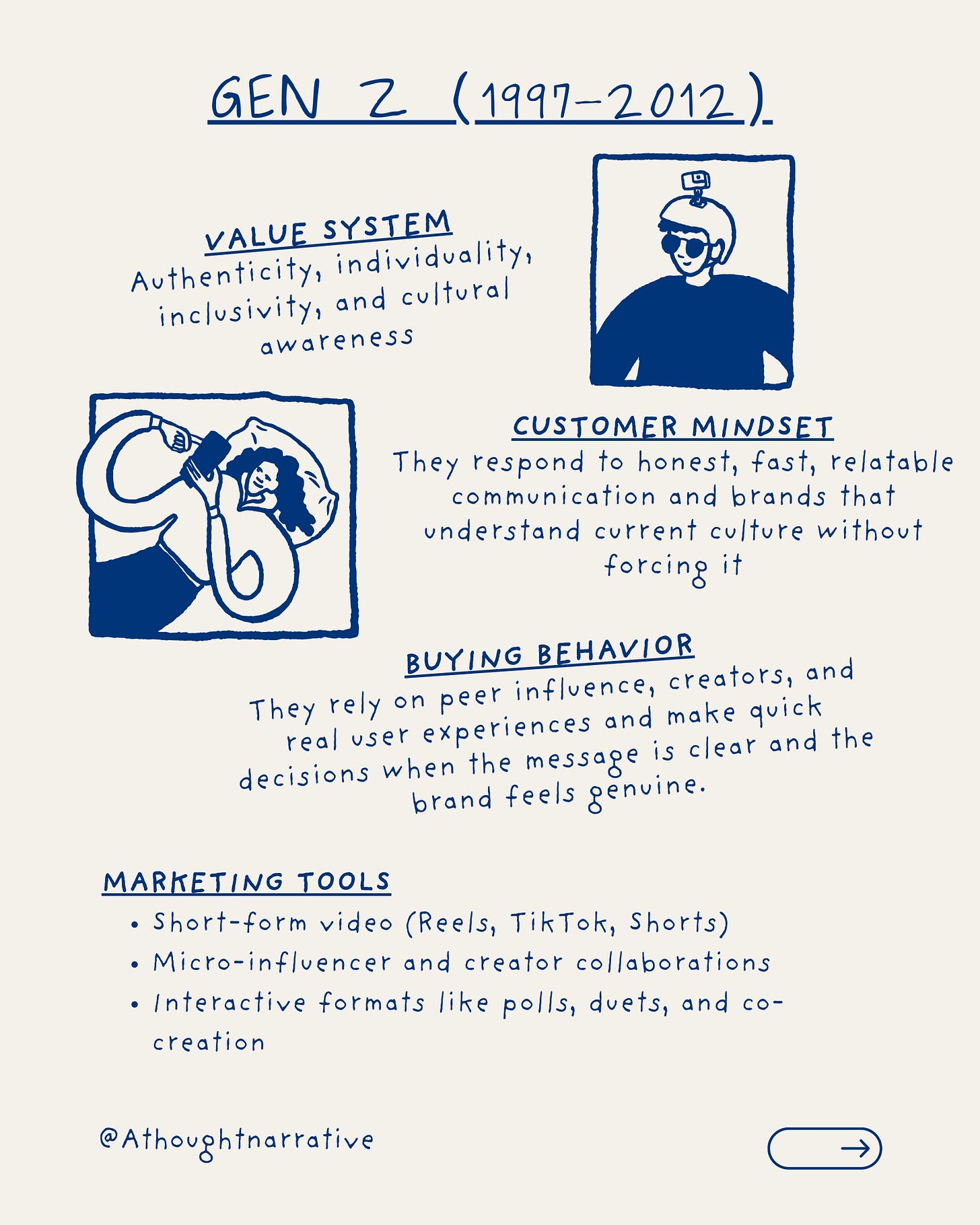
Gen Z (1997–2012)
Gen Z engages through cultural awareness. They respond to brands that understand the environments they operate in and show up with fluency. Presence and behaviour carry more weight than messaging alone. Relevance is built through everyday visibility rather than announcements.
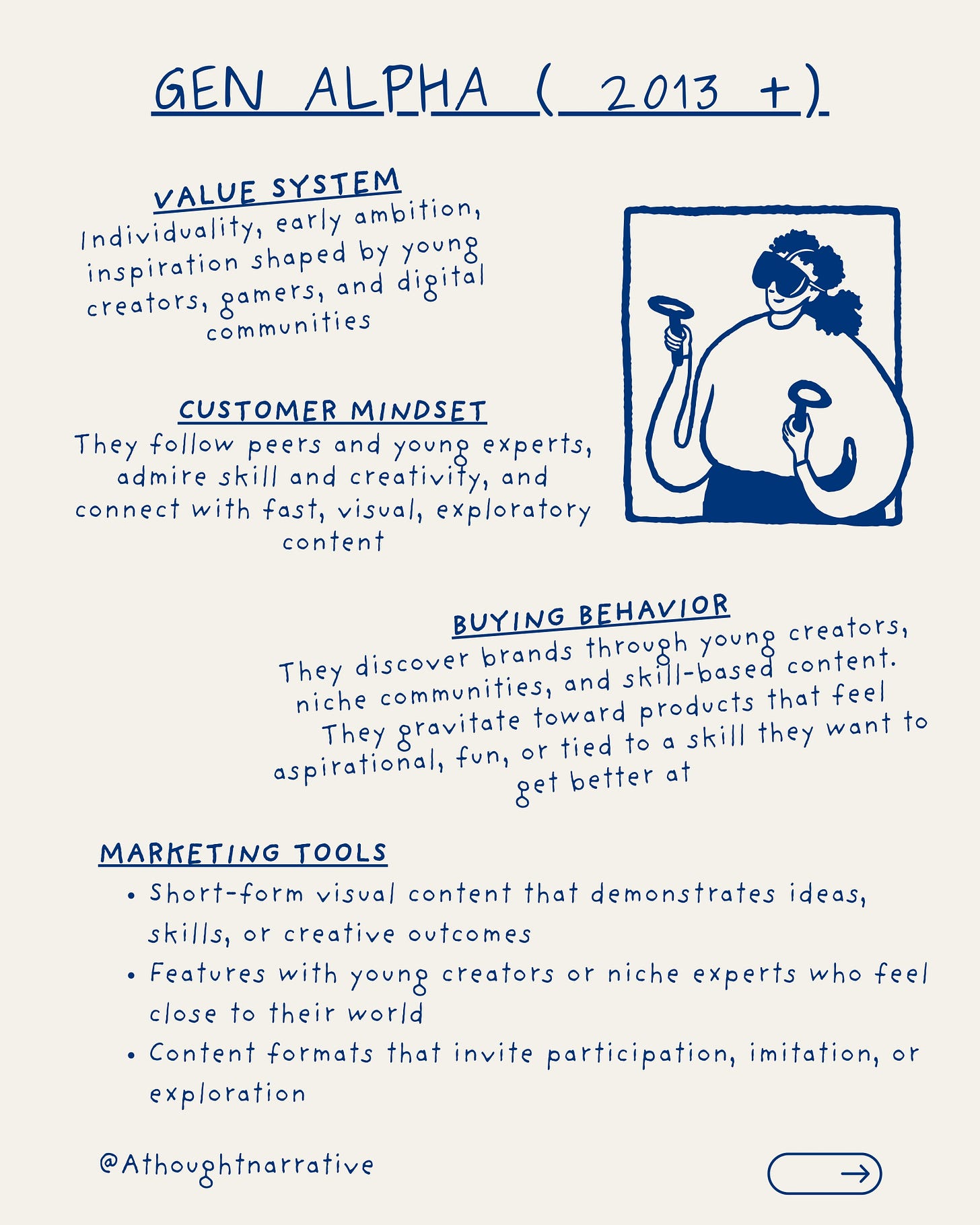
Gen Alpha (2013 onwards)
Gen Alpha forms preferences early through exploration, play, and observation. Interest grows through making, learning, and watching others create. Brands become familiar through experience rather than persuasion. Early relevance is shaped by usefulness within their existing worlds.
Looking at audiences through a generational lens helps bring structure to consumer thinking. It adds context to how brands are interpreted across different age groups and stages of life. This shorthand is designed to support deeper audience work, not replace it. Use it as a reference as you define who you are building for and how your brand communicates.
Kornica Dhar