Essays
Is Consideration the New Access?
We can know what is happening in people’s lives without actually speaking to them. The article examines what digital proximity means for attention, relationships and the value of genuinely considering who and what receives our time.

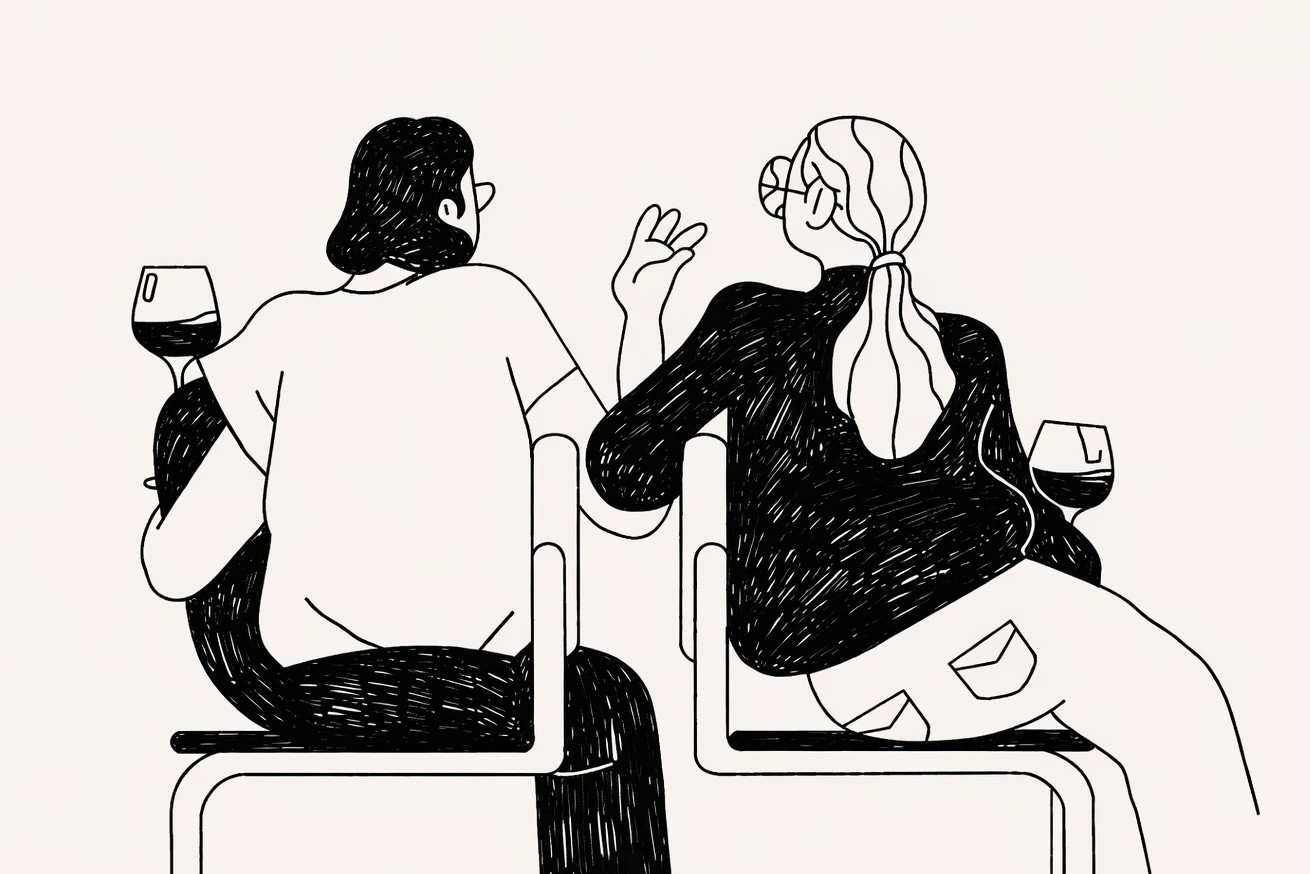
Aisha goes to pottery every weekend, and she is getting better. The bowls hold their shape now. Varun moved to Singapore last week and has already chosen his apartment. It is a compact loft on a street whose name I still cannot pronounce. Trisha left her job and finally set up the home kitchen she once described over long dinners. Her children stand beside her in flour-dusted aprons while she experiments with sourdough and slow braises.
I know all of this even though we have not had an actual conversation in over a year.
There was no dramatic fallout and no unfinished disagreement between us. We exchange reels. An occasional message when something significant happens, or simply to check in. The conversation thread remains open.
Their lives arrive in fragments across my screen, and I assemble a steady, almost convincing sense of closeness from their updates.
My closest friends now occupy the same orbit as our many acquaintances. The interface arranges everyone into one continuous stream. Intimacy and distance stand side by side, flattened into almost equal value.
This feeling, intensely personal, appears strangely universal. Relationships today often exist without sustained conversation. They remain within reach, suspended in a state that suggests continuity while requiring very little from us.
In the 1990s, sociologist Barry Wellman described a shift he called “networked individualism.” Social life was moving away from tightly bound groups toward individuals positioned at the centre of multiple overlapping circles. Technology allowed connections to stretch across geography and context without shared physical presence. That framework now describes our daily experience. Messaging platforms and social networks maintain vast webs of contact with minimal friction.
Psychological research on attention, including Daniel Kahneman’s work on cognitive load, demonstrates that mental bandwidth operates within limits. Digital environments intensify the number of demands placed upon them. Work communication, news alerts, group chats, family logistics, and social updates converge within the same device. Each interaction expects an interpretation or response. It eventually comes down to priorities and choices, and each carries professional or social consequences.
Whether we continue a conversation, return to a paused exchange, respond immediately, or let it wait depends on where our time and energy are already committed. Over time, these choices form a pattern. The pattern establishes who feels primary and becomes our central focus, and who recedes toward the periphery.
Sociologist Mark Granovetter’s research on weak ties offers part of the explanation. Relationships can retain social value even with infrequent interaction. Digital platforms extend that principle into emotional life. The archive preserves the past. The feed supplies the present with information to sustain the charade.
When we observe someone’s life in fragments, we begin forming conclusions. We assume we understand their circumstances and believe we know what occupies them and what matters to them. That assumption reduces curiosity and lowers the impulse to ask questions. If someone shares frequently online, the response often becomes, “I already see what you’re doing.” On the other side, the person being observed may feel prematurely understood or inaccurately judged. Conversation narrows before it even begins because both sides assume there is nothing left to discover.
Anthropologist Robin Dunbar’s research suggests that humans maintain layered circles of intimacy within cognitive thresholds. Digital interfaces display far more people than sustained attention can hold deeply. The structure does not eliminate relationships. It distributes attention unevenly among them.
Economic logic helps clarify the shift. Communication is easy. Time is limited. Messages can be sent instantly. Focus cannot. Attention becomes the dividing line between those who remain important in our daily lives and those who only stay in our orbit.
Platforms compete for attention because attention generates value. At the same time, we make personal decisions about where to place our focus. Over time, those decisions shape who we keep close and who falls on the edges of the periphery.
Aisha’s pottery improves. Varun learns the city grid. Trisha refines her menu. I continue to look into their lives like a Peeping Tom, offered a front-row seat to the carnival of life.
Kornica Dhar